Health and Safety Policy for Flat Clearance Regents Park
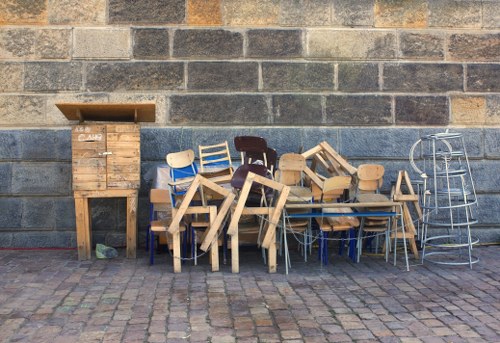 This Health and Safety Policy sets out the commitment of our flat clearance service to maintain safe working conditions across all clearance and rubbish removal activities. The objective is to protect employees, contractors, clients and members of the public from hazards associated with flat clearance, bulky waste handling and general rubbish collection. This policy applies to the flat clearance team and wider rubbish company operations and is designed to be practical, enforceable and regularly reviewed.
The policy is built on a foundation of risk assessment, safe systems of work and clear responsibilities. Managers are responsible for ensuring appropriate training, supervision and resources are in place; operatives must follow site procedures and report hazards immediately. We maintain an up-to-date register of hazards commonly found during flat clearance jobs, such as manual handling risks, sharps and biohazard materials, asbestos suspicion, and unstable structures inside properties. All staff must be familiar with emergency arrangements and on-site first aid provisions.
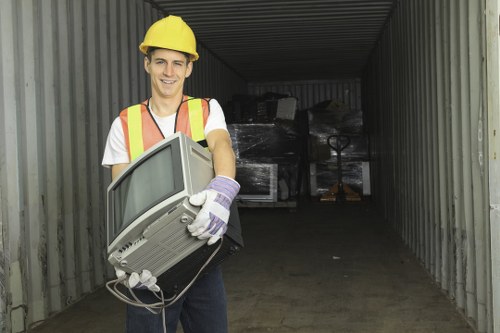
 To support the practical delivery of this health and safety policy we implement documented procedures for rubbish handling, waste segregation and secure transportation. The flat clearance crew will use appropriate personal protective equipment (PPE) such as gloves, high-visibility clothing, protective footwear and respiratory protection where dust or airborne contaminants are present. Supervisors will ensure PPE is suitable and maintained. We also require operatives to use mechanical aids or team lifting for heavy items to reduce manual handling injuries.
Risk assessment and safe work planning are central to our clearance services. Each job receives a pre-start assessment that identifies foreseeable risks and defines controls. Controls may include cordoning off areas, using signage, employing safe collection routes, and isolating utilities where necessary. The assessment forms are a mandatory element of the flat clearance paperwork and are retained as evidence of safe systems of work.
 Training and competency development are emphasised across all rubbish collection and flat clearance operations. New staff undertake an induction covering company policies, manual handling techniques, hazardous waste awareness and vehicle safety. Ongoing training includes toolbox talks, refresher courses and scenario-based briefings tailored to clearance work. We use regular monitoring and observation to ensure the workforce follows safe techniques and to identify opportunities for improvement.
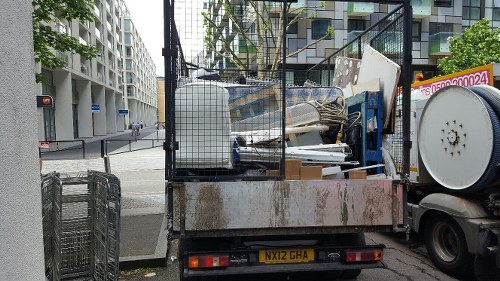
Equipment and vehicle safety receive continual attention. Vehicles used for removal and transportation of waste are inspected daily, maintained to a high standard and loaded to avoid shifting during transit. All powered equipment and lifting aids are subject to routine checks and maintenance. When operating in multi-occupancy buildings or on stairways, operatives adopt methods that prioritise public safety and minimise disruption to neighbours and communal areas.
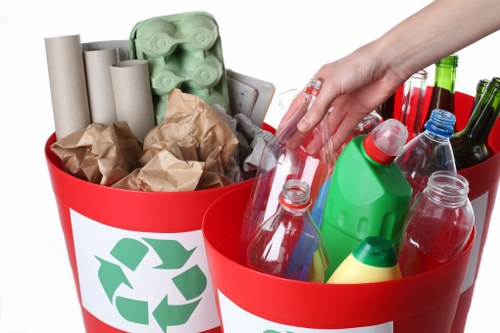
Waste classification and disposal practices align with statutory waste management principles. We segregate recyclables, hazardous items and general rubbish at source when feasible, using clear labelling and secure containment. Hazardous materials are never accepted without prior authorisation and appropriate handling arrangements. The flat clearance company maintains records of waste transfer and disposal that demonstrate compliance with waste duty of care expectations.
 A robust incident reporting and investigation process supports continual improvement. All accidents, near misses and unsafe conditions are reported without delay. Incidents are analysed to identify root causes and to implement corrective actions. Lessons learned are shared with the operational team through briefings and updates so similar incidents are prevented in the future.
 This policy outlines the following key responsibilities and measures:
- Leadership and accountability: Senior staff set the safety culture and review policy effectiveness.
- Employee duties: Follow procedures, use PPE and report hazards.
- Training: Induction and ongoing competency checks for clearance operatives.
- Equipment safety: Routine inspections and safe use of lifting aids and vehicles.
- Waste handling: Segregation, secure containment and authorised disposal routes.
To ensure transparency and continuous improvement, this health and safety policy is subject to periodic review and audit. Performance indicators include incident rates, audit findings, and feedback from operational assessments. Where deficiencies are identified, action plans are developed, prioritized and tracked until completion. Our objective is to maintain a resilient flat clearance operation where safety and service quality are aligned.
The organisation encourages open communication and participation in safety matters. Staff are empowered to stop work where they reasonably believe an activity is unsafe and to seek assistance from supervisors or the safety team. Regular safety meetings and toolbox talks provide forums for discussing emerging risks linked to rubbish removal, bulky waste collection and clearance assignments.
In summary, this Health and Safety Policy for flat clearance and rubbish removal services emphasises prevention, competence and accountability. By integrating safe systems of work, appropriate PPE, thorough risk assessment and ongoing training, the flat clearance service aims to protect people and property while delivering efficient clearance operations. This policy is a living document and will be updated as operations evolve and best practices develop.
Policy Review and Adoption
Signed and approved by management
Review interval: Annual or sooner following significant change.
Implemented controls and documented processes form the basis for safe, professional flat clearance services within our rubbish company service area.